Expert Stove & Oven Repair in Marlborough, MA
Appliance Repair for Homes & Businesses in Marlborough, Northborough, Southborough, Boylston, Massachusetts and Nearby Areas
Stove and Oven Repair in Marlborough, Massachusetts, Appliance Repair Pros
A broken stove or oven stops your kitchen cold. Whether you are trying to prepare a weeknight dinner or hosting a holiday meal you need a cooking appliance that heats accurately and safely. At Appliance Repair Pros we provide specialized stove and oven repair services for homeowners in Marlborough, Southborough, Northborough, Boylston, and the nearby communities. From gas ranges that refuse to light to electric ovens that burn your cookies we have the technical skills to diagnose and fix the problem.
Marlborough features a wide variety of kitchen setups ranging from the natural gas connected homes near the downtown area to the electric only condos found in newer developments. We are familiar with the specific safety requirements and common failures of both fuel types. Whether you are dealing with a burner that clicks endlessly, an oven door that is locked shut, uneven baking temperatures, or a glass cooktop that is displaying an error code we can help. We prioritize accurate diagnostics to ensure your appliance is repaired correctly and safely. We treat your home with care and leave the kitchen as clean as we found it.
Contact us today to schedule your service visit.
Stove and Oven Repair Services in Marlborough
Modern cooking appliances are more than just metal boxes with fire inside. They rely on complex interaction between temperature sensors, electronic control boards, and safety valves. When one component drifts out of spec the entire appliance can become unreliable or unsafe. We handle repairs for all major configurations of cooking equipment found in local homes.
Cooking systems we work on:
- Gas ranges and slide in units
- Electric freestanding stoves
- Built in wall ovens (single and double)
- Gas cooktops and rangetops
- Electric glass smooth top cooktops
- Induction cooktops
- Dual fuel ranges (gas cooktop with electric oven)
- Pro style ranges and commercial style residential units
What makes oven and stove repair tricky:
- High voltage electricity (240 volts) in electric units
- Gas safety valves and pressure regulators
- Glow bar igniters and spark modules
- Electronic temperature control boards
- Convection fans and elements
- Self cleaning latch mechanisms
- Glass touch panels and user interfaces
- Temperature calibration offsets
Common Stove and Oven Problems We Fix
Gas burner will not light
You turn the knob to cook dinner and hear a clicking sound but the flame never appears. Or perhaps you hear no clicking at all. This is the most common issue with gas ranges and it can be caused by a lack of spark or a lack of gas flow to the specific burner.
Likely causes:
- Clogged burner ports from food spills
- Faulty spark ignition module
- Cracked spark electrode
- Defective burner switch harness
- Moisture in the burner assembly
How we diagnose it
We test the spark module to see if it is sending high voltage to the electrode. We inspect the ceramic electrode for hairline cracks that allow the spark to ground out before reaching the gas. We also check the burner caps for alignment and cleanliness to ensure gas can flow properly.
What you can do right now
Lift the burner cap and check for food debris clogging the small holes. If you recently cleaned the stove the burner might just be wet. Let it dry out for an hour and try again.
Electric burner will not heat
On an electric stove a dead burner is a major inconvenience. Whether it is an old school coil element or a modern glass top radiant element the symptom is the same. You turn the knob and the surface stays cold.
Likely causes:
- Burnt out heating element
- Failed infinite switch (the knob control)
- Loose wire connection
- Damaged receptacle block (for coil burners)
- Main control board failure
How we diagnose it
We test the heating element for continuity to see if the internal wire is broken. We test the switch to ensure it is sending voltage to the element when turned on. For glass tops we check the ribbon cables and the limiter switch built into the element.
What you can do right now
If you have coil burners try swapping the non working element with another one of the same size from the stove. If the swapped element works the original element is bad. If it still does not work the problem is in the stove wiring.
Oven will not heat up
You set the oven to bake but after twenty minutes it is still cold inside. This prevents you from cooking almost anything. In gas ovens this is often due to a weak igniter while in electric ovens it is usually a failed heating element.
Likely causes:
- Weak or broken bake igniter (gas)
- Burnt out bake element (electric)
- Tripped thermal safety fuse
- Failed temperature sensor
- Control board relay failure
How we diagnose it
For gas ovens we observe the igniter. If it glows but the gas valve does not open the igniter is likely too weak to draw the safety amperage required. For electric ovens we test the element for resistance. We also check the power supply to ensure the unit is receiving the full 240 volts required for heat.
What you can do right now
Check your home circuit breaker. Electric ovens run on a double breaker. Sometimes one half of the breaker trips leaving the lights working but cutting power to the heating elements.
Oven burns food or bakes unevenly
If your cookies are burnt on the bottom but raw on top or if a roast takes twice as long as the recipe says your oven temperature is drifting. This makes following recipes impossible and leads to wasted food.
Likely causes:
- Failed temperature sensor
- Oven calibration is off
- Convection fan not running
- Blocked airflow from foil on racks
- Door gasket leaking heat
How we diagnose it
We test the resistance of the temperature sensor at room temperature to see if it is within factory specs. We inspect the convection fan to ensure it is circulating air. We also check the door hinges and seal to verify that heat is not escaping which causes the element to cycle on too frequently.
What you can do right now
Remove any aluminum foil you have placed on the bottom of the oven or the racks. Foil reflects heat and blocks airflow causing severe hot spots and uneven cooking.
Self clean door latch is stuck
The self clean cycle uses extreme heat to burn off grease. Sometimes after the cycle finishes the safety lock fails to disengage leaving your oven door permanently locked shut. You cannot use the oven and you cannot get your food out if it happened during cooking.
Likely causes:
- Failed door lock motor assembly
- Warped door latch
- Control board logic error
- Thermostat reporting high heat incorrectly
How we diagnose it
We have methods to manually release the door latch to open the oven. Once open we test the lock motor and the switches that tell the control board if the door is locked or unlocked. We often find the motor has burned out from the high heat of the cleaning cycle.
What you can do right now
Do not force the door open. You will break the latch hook or the glass. Try running a short self clean cycle again to see if the reset logic clears the lock.
Gas smell near the stove
The smell of gas is a serious safety concern. It indicates a leak in the supply line or a valve that is not closing completely. This requires immediate attention.
Likely causes:
- Leaking gas pressure regulator
- Loose connection at the supply line
- Faulty surface burner valve
- Crack in the internal gas manifold
- Igniter taking too long to light the gas
How we diagnose it
We use an electronic combustible gas detector to sniff out the source of the leak. We check all internal piping connections and the regulator. If the smell only happens when lighting the oven it is often a weak igniter letting gas flow for too long before ignition.
What you can do right now
If the smell is strong turn off the gas supply valve behind the stove or at your meter and open windows. Do not operate light switches or the stove. Contact us or your gas company immediately.
Control panel or display is blank
If the clock is dark and the buttons do not respond the brain of the oven is offline. This means you cannot set temperatures or use the timer. It often happens after a power surge or a self clean cycle.
Likely causes:
- Thermal fuse blown
- Main control board failure
- Loose ribbon cable connection
- User interface touch pad failure
- Transformer failure
How we diagnose it
We check for power entering the control board. If power is present but the display is dead the board or the thermal fuse protecting it has likely failed. We trace the wiring to ensure no wires have melted or shorted against the metal chassis.
What you can do right now
Flip the breaker for the oven off for five minutes and then turn it back on. This resets the electronic control board and can sometimes clear a glitch.
Glass cooktop is cracked or showing error
Glass cooktops are sleek but fragile. A heavy pot dropped on the edge can cause a crack. Additionally modern induction cooktops can display error codes if they overheat or if the magnetic coils fail.
Likely causes:
- Physical impact damage
- Thermal shock from cold water on hot glass
- Touch control sensor failure
- Generator board failure (induction)
- Pot detection sensor failure
How we diagnose it
For cracks the only solution is replacing the glass top assembly. For error codes on induction units we test the generator boards and the cooling fans underneath the glass. Overheating is a common cause of induction errors.
What you can do right now
If the glass is cracked stop using the cooktop immediately. Spills can seep through the crack and reach the high voltage wiring below causing a dangerous electrical short.
Safety Notes for Stove and Oven Issues
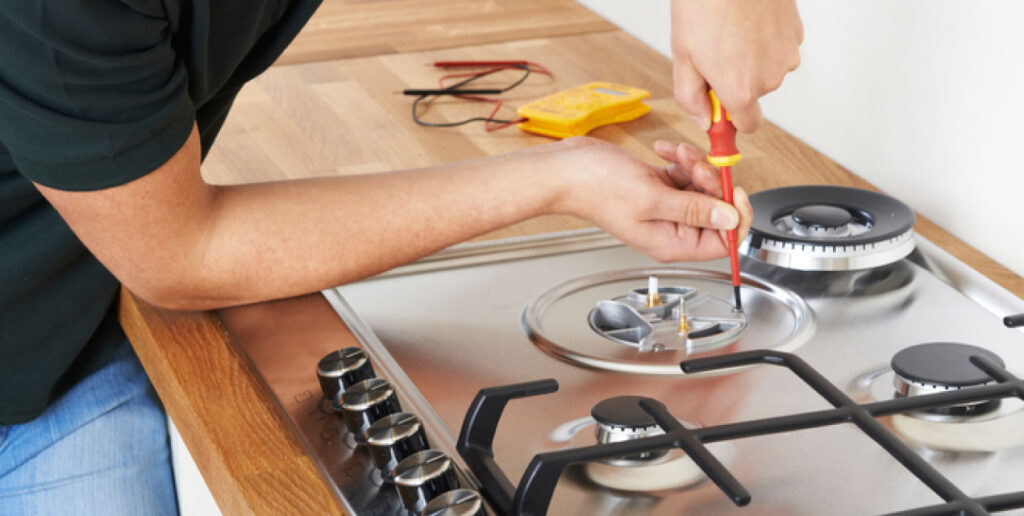
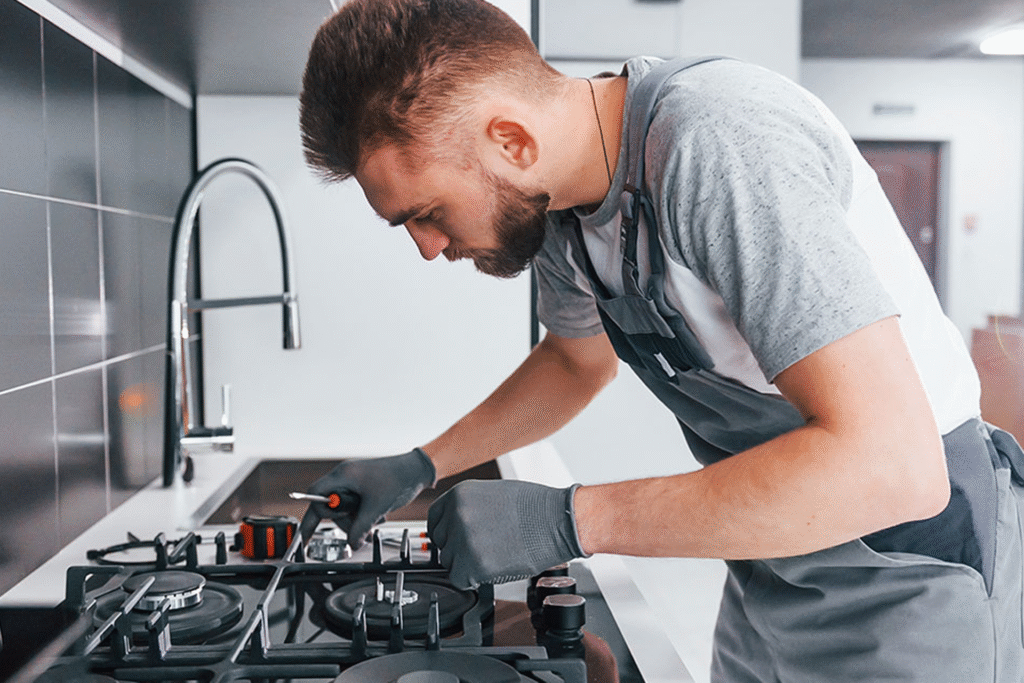
Stove and oven repair presents two distinct and serious dangers: explosive gas and high voltage electricity. Most electric ovens run on 240 volts which is enough to cause severe injury. Gas units carry the risk of leaks and carbon monoxide. Safety is our absolute priority during every repair.
Safety checklist for homeowners:
- If you smell rotten eggs (Gas): This is a gas leak. Extinguish any open flames. Do not touch electrical switches. Evacuate the home and call the gas company or the fire department from a safe distance.
- If you see sparks inside the oven: Turn off the oven immediately. This is usually the heating element failing and arcing. Do not use the oven until the element is replaced.
- If the glass cooktop cracks: Do not cook on it. Even a small crack allows liquid to enter the electrical compartment below creating a shock hazard.
- If the burner flame is yellow (Gas): A healthy flame should be blue. A yellow or orange flame indicates incomplete combustion which produces carbon monoxide. Have this checked professionally.
- If the stove tips forward: Ensure your anti tip bracket is installed. This is a crucial safety device that prevents the range from falling over if a child climbs on the open door.
Brands We Service for Stove and Oven Repair in Marlborough
We service a wide array of cooking appliances from basic rental property stoves to high end chef’s kitchens. Each brand has its own quirks regarding ignition systems and sensor placement. We stay current on the service manuals for all major manufacturers.
Whirlpool family and similar designs (Whirlpool, Maytag, KitchenAid, Amana)
These are the workhorses of the American kitchen. They are generally robust and easy to service. KitchenAid ranges often feature convection systems and dedicated baking drawers. Maytag units are known for their heavy duty grates and knobs.
Common issues we see with these models:
- Spark modules failing causing continuous clicking
- “AquaLift” self clean cycles not cleaning well
- Control board relays failing for the bake element
- Temperature sensors drifting out of spec
- Door hinges locking up
Why correct diagnosis matters
Whirlpool gas ranges often use a specific type of spark ignition. If the polarity of your outlet is reversed these stoves will spark continuously even when off. We check the outlet wiring to rule this out.
GE family (GE, Hotpoint, and related lines)
GE ranges are incredibly popular and reliable. They produce everything from basic coil electric stoves to the high end Monogram and Café series. GE ovens often use a very accurate electronic temperature control system.
Common issues we see with these models:
- Glow bar igniters wearing out (very common)
- F7 error codes related to stuck keypad buttons
- Glass cooktop surface elements burning out
- Convection fans making rattling noises
- Safety valves failing to open
Why correct diagnosis matters
GE electric ovens often have a hidden bake element under the floor of the oven. Accessing it requires removing panels. We test it from the back first to confirm it is bad before disassembling the oven interior.
Samsung and LG
These brands bring high tech features to the kitchen including dual door ovens and smart connectivity. They often use relay boards separate from the main display board and have complex air circulation systems.
Common issues we see with these models:
- Burners lighting but not staying lit
- Oven temperature running too hot
- Touch screens becoming unresponsive
- Knob shafts breaking
- Relay board failures preventing heating
Why correct diagnosis matters
Samsung gas ranges often use a microswitch on the valve to trigger the spark. If this switch gets wet or greasy it can fail. We test the switch individually rather than replacing the whole valve assembly.
Frigidaire and Electrolux
Frigidaire is a dominant brand in the induction and electric range market. They are known for their “Air Fry” ranges and fast heating induction tops. Electrolux focuses on premium built in wall ovens with glide racks.
Common issues we see with these models:
- Induction generators displaying error codes
- Bake elements blistering and breaking
- Control boards beeping randomly
- Meat probe jacks failing
- Cooling fans running loudly after cooking
Why correct diagnosis matters
On induction units diagnosis involves checking the communication between the user interface and the power generators. A misdiagnosis here is very expensive so we take care to isolate the bad board.
Bosch and Thermador
These premium brands offer high performance cooking with industrial styling. Thermador is famous for its star shaped burners. Bosch ranges often slide in for a built in look and feature heavy duty electronics.
Common issues we see with these models:
- Igniter clicking issues due to moisture sensitivity
- Display dimming or fading over time
- Selector switches failing
- Simmer control modules failing (XLO burners)
- Door glass seals leaking
Why correct diagnosis matters
Thermador’s “ExtraLow” simmer feature uses a complex solenoid system to cycle the flame on and off. We are trained to troubleshoot this specific system which is unique to the brand.
Understanding Common Stove and Oven Error Codes
When your oven detects a problem it often displays an “F” code. These codes give us a starting point for diagnosis but they rarely tell the whole story. A sensor code might mean a bad sensor or it might mean the wire connecting the sensor is pinched.
- F0 / F1: Electronic control board failure or stuck keypad. The oven thinks a button is being held down.
- F2: Oven temperature too high. This is a runaway temperature condition often caused by a stuck relay.
- F3 / F4: Open or shorted temperature sensor. The oven cannot read how hot it is.
- F5: Watchdog and hardware monitoring. The control board has detected a hardware failure.
- F7: Function key shorted or stuck button. Similar to F1 often related to the membrane switch.
- F9: Door latch failure. The oven cannot lock or unlock the door.
- Samsung C-d0: Stuck key on the control panel.
- Samsung C-20: Temperature sensor error.
Maintenance Tips for Stove and Oven Owners in Marlborough
A little preventative care can keep your stove and oven cooking perfectly for years. Here are some tips to avoid common breakdowns.
Do not use foil on the oven bottom: Putting foil on the bottom of the oven to catch spills is the number one cause of heating issues. It reflects heat back at the element causing it to burn out and blocks proper airflow.
Clean spills immediately: Sugary spills or acidic tomato sauce can eat into the enamel coating of the oven floor if left to bake on repeatedly. This leads to rust and holes in the oven liner.
Check your door seal: Feel the rubber gasket around the oven door. If it is torn or brittle heat will escape. This forces the oven to work harder and can melt the plastic knobs above the door.
Clean gas burner ports: If your flame is uneven use a pin or a needle to gently clear the small holes in the burner cap. This improves gas flow and ignition.
Calibrate your temperature: Most ovens allow you to adjust the temperature offset by +/- 30 degrees in the settings menu. If you consistently burn food try lowering the offset by 10 degrees.
Be careful with water on glass tops: Do not wipe a hot glass cooktop with a wet dripping cloth. The thermal shock can crack the glass. Wait for it to cool down.
Use the self clean sparingly: The extreme heat of the self clean cycle (over 800 degrees) is stressful on the electronic components. We recommend manual cleaning for minor spills and using self clean only once or twice a year.
Check the anti tip bracket: Look behind your range to ensure the rear foot is engaged in the metal bracket on the floor. This prevents the stove from tipping if heavy weight is placed on the open door.
Service Area for Stove and Oven Repair in and Around Marlborough, Massachusetts
We are a local business committed to serving our neighbors in the Marlborough area. Our service territory is designed to be manageable so we can offer prompt and reliable appointments. We cover the historic districts the new developments off Route 20 and the quiet residential streets near Ghiloni Park. We also travel to the surrounding towns to ensure our community has access to quality repair.
- Marlborough
- Northborough
- Southborough
- Boylston
- Hudson
- Berlin
- Sudbury
- Westborough
Zip codes we serve: 01752, 01532, 01772, 01505
Frequently Asked Questions
Is it worth repairing a 15 year old range?
Gas ranges can often last 20 years or more and are usually worth repairing if the parts are available. Electric ranges with complex boards might be less economical to fix at that age. If the stove is in good cosmetic condition and the repair is under half the cost of replacement we generally recommend fixing it.
Why does my oven take so long to preheat?
A gas oven should preheat to 350 degrees in about 10 to 15 minutes. If it takes 30 minutes or more it is a classic sign of a weak igniter. The igniter is strong enough to open the valve occasionally but not consistently causing the flame to cycle on and off too slowly.
Can you replace just the glass on my cooktop?
Yes the glass top can be replaced. However the glass assembly is often the most expensive part of the stove. We will check the price of the part and let you know if it makes sense compared to buying a new stove.
Do you fix induction cooktops?
Yes we are experienced with induction technology. These repairs often involve diagnosing high voltage generator boards and cooling fans. Because induction units are expensive to replace repair is often a very good option.
Why is there a gas smell when I turn on the oven?
A slight smell of gas right when the oven lights is normal. However if the smell persists or is strong it means the igniter is taking too long to light the gas. This releases unburned gas into the oven cavity. This should be repaired promptly.
My self clean cycle locked the door and it won’t open. What do I do?
First turn off the circuit breaker for 10 minutes to reset the board. If it stays locked after power is restored do not force it. You will break the latch. Call us to manually release the lock and diagnose the failure.
Is there a stove repair technician near me in Marlborough?
Yes we are based locally and serve Marlborough and the surrounding towns like Northborough and Boylston. We are your neighbors and we can get to you quickly without long travel delays.
Why is my electric burner only working on high?
This is usually caused by a failed “infinite switch” behind the knob. The internal contact welds shut causing the element to receive full power regardless of where you set the dial. The switch needs to be replaced.
Do you calibrate oven temperatures?
Yes we can check the actual temperature against the set temperature using a digital thermocouple. If it is off we can adjust the calibration in the oven’s software or replace the sensor if it is defective.
Can I use my oven if the inner glass is shattered?
No. The inner glass is essential for heat retention. Using the oven without it will cause the outer glass to dangerously overheat and potentially shatter as well. It also poses a burn hazard to anyone touching the door.
Conclusion
A reliable stove is the heart of a functional kitchen. At Appliance Repair Pros we are dedicated to providing safe expert stove and oven repair in Marlborough, Massachusetts and the surrounding areas. Whether you have a gas leak concern, a heating element failure, or a control board glitch we have the tools and the training to handle it. We focus on doing the job right so you can get back to cooking for your family.
Reach out to us for assistance with your cooking appliance needs.


